14 Results for "

Heptapleurum ellipticum (Blume) Seem.

" in MedChemExpress (MCE) Product Catalog:
Products (14)

14 Results for "Heptapleurum ellipticum (Blume) Seem." in MCE Product Catalog:

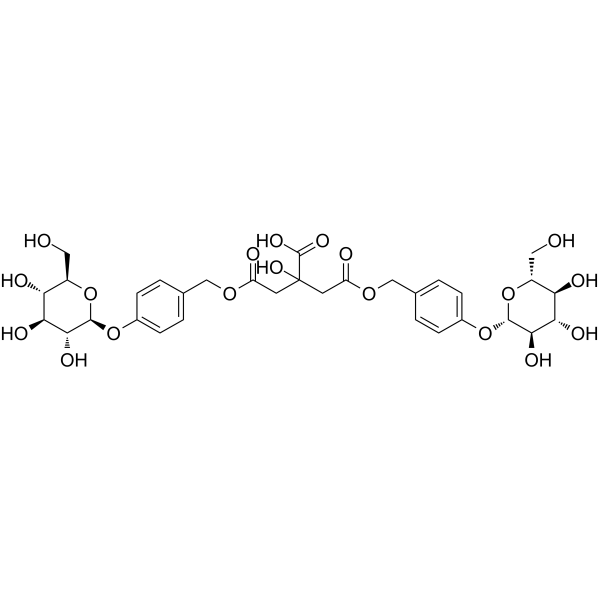
Cat. No.: HY-N2125
CAS No.: 174972-80-6
Parishin C is a brain-penetrant major bioactive component found in Gastrodia elata Blume. Parishin C is a 5-HT1A receptor agonist with an EC50 of 34 nM. Parishin C has antipsychotic and neuroprotective effects. Parishin C protects against Aβ-induced long-term potentiation damage and NMDA receptor current impairment. Parishin C reduces oxidative stress, pro-inflammatory cytokine levels, caspase activity, brain water content, and cerebral infarct volume; increases antioxidant enzyme activity and BDNF levels; improves nerve function and histopathological brain damage. Parishin C attenuates phencyclidine-induced immobility time increases, sociability deficits, and visual recognition memory impairment. Parishin C can be used for the research of ischemic stroke, Alzheimer's disease, and schizophrenia-like psychosis .
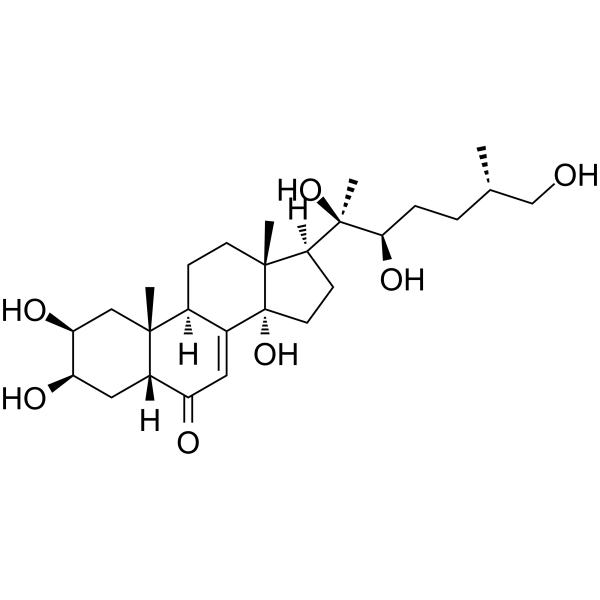
Cat. No.: HY-N4130
CAS No.: 19595-18-7
25S-Inokosterone is a phytoecdysone in the roots of two same species of A. bidentata Blume and A. japonica Nakai, and two different species of C. capitata Moq and C. officinalis Kuan. 25S-Inokosterone has the potential for the LPS-induced acute kidney injury research .
Cat. No.: HY-A0257A
CAS No.: 69-43-2
Target:  

CaMK

Research Areas:  

Neurological Disease

Prenylamine lactate is a calcium-modulating protein (CaM) antagonist that inhibits CaM-dependent enzymes and can slowly relax smooth muscle preparations. The effect of Prenylamine lactate on smooth muscle is not inhibited by the calcium agonist Bay K 8644 (HY-10588). Reports suggest that under low heart rate conditions, Prenylamine seems to enhance voltage-dependent transmembrane calcium currents .
Cat. No.: HY-159104
CAS No.: 8015-91-6
Synonyms: Cinnamomum Cassia oil
Cinnamon bark oil, from Cinnamonum zeylanicum Blume is a antifungal agent against fungi causing respiratory tract mycoses .
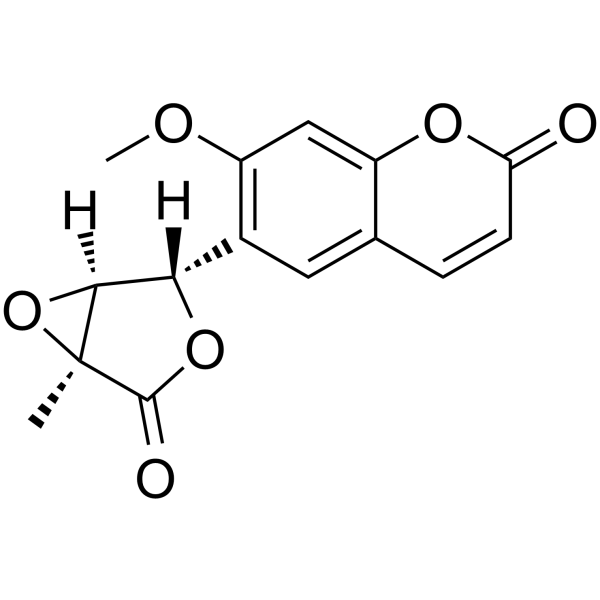
Cat. No.: HY-N3258
CAS No.: 15085-71-9
Synonyms: Micromelumin
Micromelin is a coumarin from Micromelum minutum (Forst. f.) Seem (family Rutaceae) .
Cat. No.: HY-N3279
CAS No.: 80151-89-9
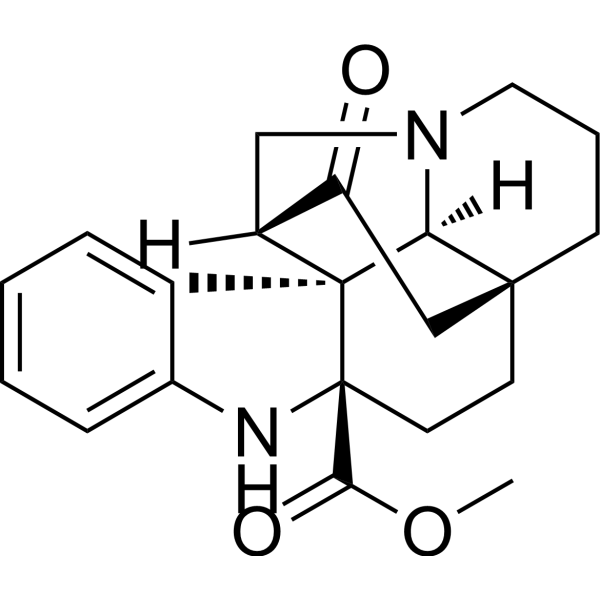
Methyl N1-demethoxycarbonylchanofruticosinate is an alkaloid isolated from the leaves of Kopsia flavida Blume of the Apocynaceae family .
Cat. No.: HY-N12361
CAS No.: 94492-23-6
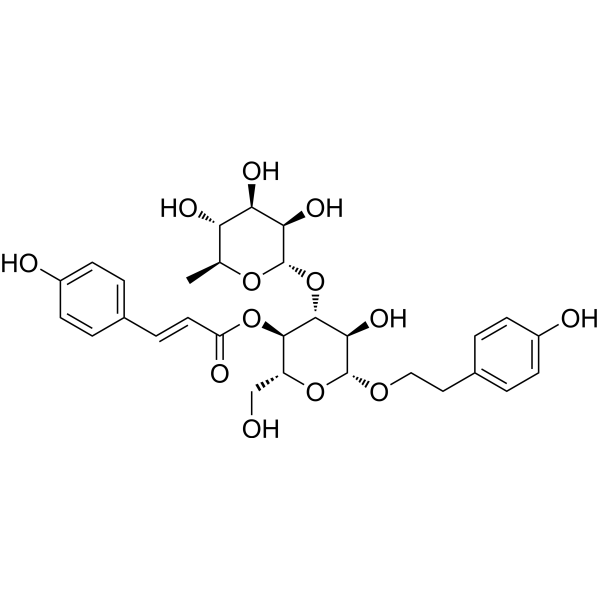
Osmanthuside B can be isolated from Pseuderanthemum carruthersii (Seem.) Guill. var. atropurpureum (Bull.) Fosb and has weak acetylcholinesterase inhibitory activity .
Cat. No.: HY-N6776R
CAS No.: 12627-35-9
Prenylamine (lactate) (Standard) is the analytical standard of Prenylamine (lactate). This product is intended for research and analytical applications. Prenylamine lactate is a calcium-modulating protein (CaM) antagonist that inhibits CaM-dependent enzymes and can slowly relax smooth muscle preparations. The effect of Prenylamine lactate on smooth muscle is not inhibited by the calcium agonist Bay K 8644 (HY-10588). Reports suggest that under low heart rate conditions, Prenylamine seems to enhance voltage-dependent transmembrane calcium currents .
Cat. No.: HY-A0257AR
CAS No.: 69-43-2
Research Areas:  

Neurological Disease

Prenylamine (lactate) (Standard) is the analytical standard of Prenylamine (lactate). This product is intended for research and analytical applications. Prenylamine lactate is a calcium-modulating protein (CaM) antagonist that inhibits CaM-dependent enzymes and can slowly relax smooth muscle preparations. The effect of Prenylamine lactate on smooth muscle is not inhibited by the calcium agonist Bay K 8644 (HY-10588). Reports suggest that under low heart rate conditions, Prenylamine seems to enhance voltage-dependent transmembrane calcium currents .
Cat. No.: HY-N2125R
CAS No.: 174972-80-6
Parishin C (Standard) is the analytical standard of Parishin C (HY-N2125). This product is intended for research and analytical applications. Parishin C is a brain-penetrant major bioactive component found in Gastrodia elata Blume. Parishin C is a 5-HT1A receptor agonist with an EC50 of 34 nM. Parishin C has antipsychotic and neuroprotective effects. Parishin C protects against Aβ-induced long-term potentiation damage and NMDA receptor current impairment. Parishin C reduces oxidative stress, pro-inflammatory cytokine levels, caspase activity, brain water content, and cerebral infarct volume; increases antioxidant enzyme activity and BDNF levels; improves nerve function and histopathological brain damage. Parishin C attenuates phencyclidine-induced immobility time increases, sociability deficits, and visual recognition memory impairment. Parishin C can be used for the research of ischemic stroke, Alzheimer's disease, and schizophrenia-like psychosis .
Cat. No.: HY-N3064
CAS No.: 501086-15-3
Pilosol A is a polyacetylene alcohol that can be isolated from Bidens pilosa L. var. minor (Blume) Sherff .
Cat. No.: HY-N17978
CAS No.: 185382-93-8
Ecliptasaponin B (compound 7) is a triterpenoid saponin and growth inhibitor present in the leaves of Aralia elata Seem.
Cat. No.: HY-N17840
CAS No.: 134515-70-1
6α-Methoxygeniposidic acid is an iridoid glucoside found in the leaves of Hedyotis tenelliflora Blume (Rubiaceae) .
Cat. No.: HY-L169
662 compounds

Resistance refers to the decrease in the effectiveness of drugs in treating diseases or symptoms. Due to the increasing global antibiotic resistance, it may threaten our ability to treat common infectious diseases. Drug resistance is also the main cause of chemotherapy failure in malignant tumors. In approximately 50% of cases, drug resistance exists even before chemotherapy begins. There are many mechanisms of anticancer drug resistance, including increased protein expression that leads to drug removal, mutations in drug binding sites, recovery of tumor protein production, and pre-existing genetic heterogeneity in tumor cell populations. In addition, the issue of drug resistance seems to have affected the development of new anticancer drugs. Drug resistance may be caused by various conditions, such as mutations, epigenetic modifications, and upregulation of drug efflux protein expression. Overcoming multidrug resistance in cancer treatment is becoming increasingly important.

MCE designs a unique collection of 662 anti-drug-resistant compounds. It is a good tool to be used for research on cancer and other diseases.

  • 1

